
Bulk transport vehicles need materials that are light, strong, weldable, and reliable in corrosive service. In this field, aluminium 5083 is one of the most widely used alloys for liquid tank trucks, fuel transport bodies, chemical containers, and some special vehicles. For companies sourcing sheet and plate in volume, understanding why this alloy is chosen, how it compares with nearby grades, and what purchasing points matter most can reduce processing risk and long-term operating cost.
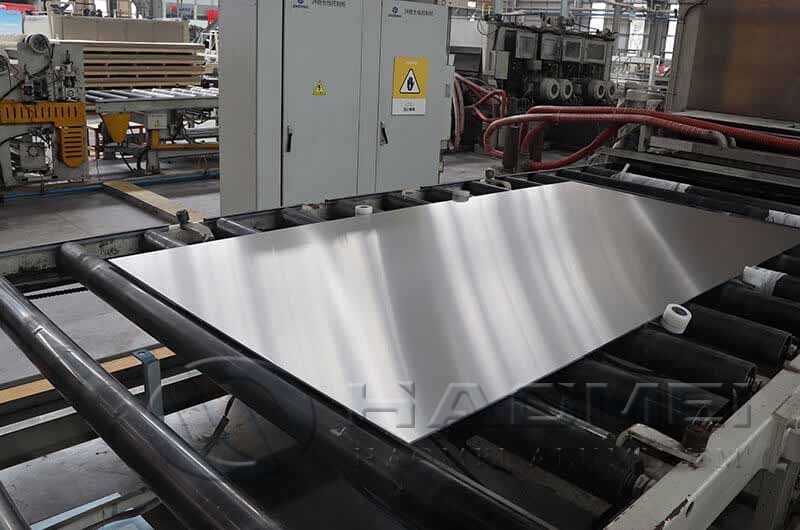
Why aluminium 5083 is widely used in tank trucks
5083 belongs to the Al-Mg series. It is known for high corrosion resistance, good weldability, and strong performance in medium-strength structural applications. In tanker manufacturing, these characteristics matter because the material must endure vibration, repeated loading, weather exposure, and contact with different transported media.
Compared with carbon steel, 5083 can significantly reduce vehicle deadweight. That lower tare weight helps improve payload efficiency and fuel economy. Compared with some other aluminum alloys, it also maintains good toughness after welding, which is important for shell plates, baffles, heads, and structural sections.
For many transport applications, processed 5083 aluminum plate is used for the tank shell and major load-bearing sections, while some manufacturers also evaluate 5454 aluminum plate for specific tanker media and service conditions.
Typical advantages of 5083 in tanker use
- Low density, helping reduce total vehicle weight
- Good corrosion resistance in atmospheric and marine-like environments
- Excellent weldability for large fabricated tanks
- Stable performance in pressure-free or low-pressure transport structures
- Good formability for curved shell sections and end caps
Key properties that matter when purchasing plate
For bulk orders, the alloy name alone is not enough. Tank truck producers should also confirm temper, thickness tolerance, width, flatness, surface quality, and compliance documents. In practice, 5083-H111, 5083-H112, and 5083-O are common depending on fabrication route and design requirement.
The table below shows the purchasing points that are usually more important than headline strength values alone.
| Item | Why it matters for tank trucks | What to confirm with supplier |
|---|---|---|
| Alloy | Affects corrosion resistance and weldability | EN/ASTM/GB grade equivalence |
| Temper | Influences forming and final strength | H111, H112, O, or project-specific temper |
| Thickness | Directly affects weight and structural margin | Actual tolerance, not only nominal size |
| Width and length | Determines nesting efficiency and weld seam count | Maximum available width and custom cut length |
| Surface quality | Impacts forming, appearance, and inspection | No cracks, heavy scratches, edge defects |
| Ultrasonic quality | Useful for thick plate reliability | Internal soundness if required |
| Mill certification | Needed for traceability and compliance | MTC, chemical composition, mechanical data |
| Weld performance | Critical for shell and baffle fabrication | Suitable filler wire and welding procedure |
When evaluating plate, bulk purchasers should ask not only for a quotation, but also for actual production capability. A supplier may list 5083, yet the real value depends on ingot quality, rolling control, residual stress management, and consistency between batches.
How to select the right plate for tankers and special vehicles
Different transported goods lead to different design priorities. Fuel tanks, edible liquid tanks, chemical transport tanks, powder tanks, and municipal special vehicles may require different combinations of strength, corrosion resistance, and processing performance.
1. Match alloy and temper to the application
For large road tankers, 5083 is often preferred for shell sections because it combines corrosion resistance and weldability with practical fabrication performance. If the tank design includes many deep forming operations, softer tempers may be considered first, followed by strength verification after forming and welding.
2. Check thickness based on design, not habit
Some buyers rely too much on past projects. However, thickness should match transport medium, tank diameter, compartment design, regulatory rules, and lightweight target. A plate that is too thick increases deadweight. A plate that is too thin may affect stiffness, dent resistance, and service life.
3. Pay attention to width capability
Wider plate can reduce longitudinal welds, which may improve manufacturing efficiency and lower welding deformation risk. For tanker factories producing in high volume, width optimization can have a direct effect on labor cost and cycle time.
4. Verify standards and certificates
For transport equipment, quality documents are part of procurement, not an afterthought. Depending on market and end use, buyers may need material test certificates, composition reports, tensile data, hardness data, and sometimes third-party inspection records. If the final vehicle is exported, confirm whether the plate needs to align with EN, ASTM, or local transport equipment requirements.
5. Evaluate supplier stability, not just price
The lowest price is not always the lowest procurement cost. Unstable delivery, thickness deviation, poor flatness, or inconsistent mechanical properties can increase scrap, rework, and welding difficulty. For long-term programs, stable coil or plate supply is often more valuable than a small unit-price difference.
Practical comparison: 5083 and nearby tanker alloys
In tanker and special vehicle manufacturing, several Al-Mg alloys appear frequently. Selection depends on transported media, fabrication route, and cost target.
| Alloy | Main feature | Common use in vehicles | Notes |
|---|---|---|---|
| 5083 | High corrosion resistance, good weldability, medium-high strength | Tank shells, heads, structural parts | Widely used in liquid transport tanks |
| 5454 | Good strength and good performance at elevated service temperature | Some road tanker bodies | Often considered for certain tanker contents |
| 5182 | Good formability and moderate strength | Tank ends, formed components, automotive parts | Useful where shaping is important |
| 5754 | Good corrosion resistance and formability | Special vehicle panels, some tank parts | Often used in body structures |
For many bulk purchasers, 5083 remains the mainstream choice because it offers a balanced property profile and mature processing experience across the supply chain.
What to ask a supplier before placing a bulk order
A practical purchasing discussion should include these points:
- Can the mill provide the required thickness and width range consistently?
- What temper is recommended for rolling, bending, and welding?
- Is the plate hot rolled, and what is the expected flatness level?
- Are batch-to-batch chemistry and mechanical properties stable?
- What inspection reports come with shipment?
- How is the material packed to prevent transport damage?
- What is the lead time for repeat monthly orders?
For large tank truck programs, sample testing before full release is a sensible step. Many experienced purchasers arrange trial welding, bending, and forming checks on representative sheets before committing to annual volume.
The market for tank truck plate is influenced by aluminum ingot prices, freight cost, energy prices, transport regulations, and downstream logistics demand. Because of that, timing also matters. When planning procurement of aluminium 5083, companies that combine technical review with supply-chain planning are usually better positioned to secure stable quality and predictable manufacturing performance.