
5083 H321 Aluminum Tanker Plate: 5 Questions for Tank Truck Makers
Across English Q&A communities and search discussions in recent months, 5083 H321 has been a frequent topic among tank trailer fabricators, fleet engineers, and purchasing teams comparing aluminum tanker materials. The questions below focus on practical decisions: plate selection, welding, thickness, standards, and alternatives.
Quick material snapshot
| Item | Practical meaning for tank manufacturing |
|---|---|
| Alloy | 5083 aluminum, a non-heat-treatable Al-Mg alloy |
| Temper | H321, strain-hardened and stabilized for improved resistance to stress corrosion |
| Typical use | Fuel tankers, chemical tankers, bulk powder tankers, marine tanks |
| Strength feature | Higher strength than many 5xxx aluminum sheets used in general fabrication |
| Fabrication feature | Good weldability, forming performance, and corrosion resistance |
A project using 5083 aluminum plate usually needs both material certificates and process discipline. The alloy is only one part of tanker safety; rolling quality, surface condition, forming radius, welding wire, and inspection all matter.
1. Is 5083 H321 good for aluminum fuel tanker bodies?
Yes, 5083 H321 is one of the most common choices for aluminum fuel tanker shells because it balances strength, weldability, and corrosion resistance. Compared with ordinary structural aluminum, it can help reduce vehicle weight while keeping sufficient shell rigidity for road vibration, liquid movement, and long-distance operation.
For fuel transport, the tank body is exposed to cyclic stress from braking, cornering, and surge loads. H321 temper is valued because it is stabilized after strain hardening, which supports more predictable performance during service. It also has good resistance to atmospheric corrosion, which is important when tank trucks operate in humid, coastal, or winter road salt environments.
However, the answer should not be simplified to alloy only. The final design should consider compartment layout, anti-wave baffles, manhole reinforcement, discharge area reinforcement, and welding sequence. A well-made 5083 H321 tank can perform poorly if the weld layout creates avoidable stress concentration.
2. What thickness of 5083 H321 aluminum plate is used for tank trucks?
There is no single universal thickness because it depends on tank diameter, compartment quantity, transported medium, design pressure, road regulations, and local certification rules. In common atmospheric liquid tankers, plate thickness often falls within the 4 mm to 8 mm range, while higher-load areas may need thicker material or local reinforcement.
| Tank part | Common design consideration | Typical material approach |
|---|---|---|
| Shell | Liquid load, vibration, rolling direction | 5083 H321 plate with controlled flatness |
| Heads | Forming depth, impact resistance | 5083 H321 or compatible 5xxx alloy |
| Baffles | Surge control, fatigue resistance | Same or compatible aluminum plate |
| Reinforcement rings | Local stress distribution | Thicker plate or formed profile |
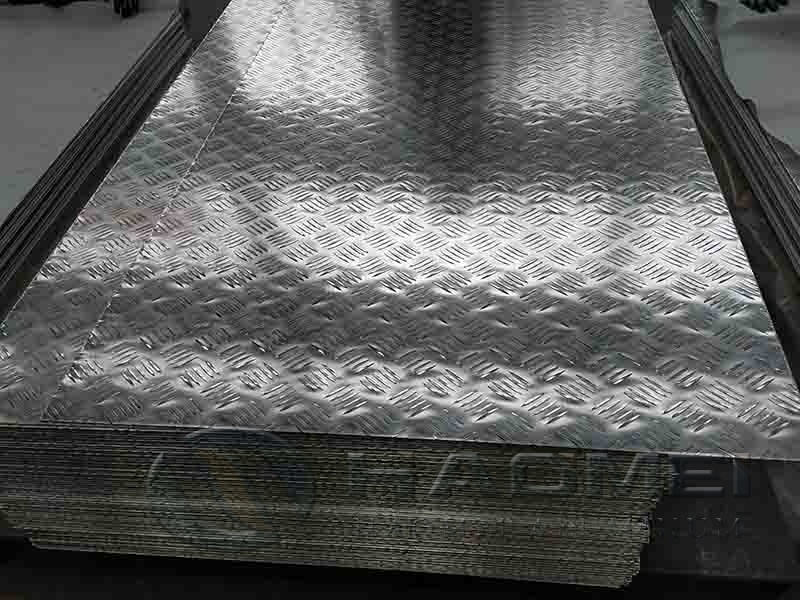
| Walkway and platform | Slip resistance, operator access | Tread plate or patterned aluminum |
A practical purchasing point is tolerance control. If nominal thickness is correct but actual tolerance is unstable, weight calculation, forming behavior, and weld gap control may all be affected. For repeat tanker production, consistent thickness and flatness save more time than a low initial plate price.
3. Can 5083 H321 aluminum tanker plate be welded easily?
5083 H321 is considered highly weldable among aluminum alloys. It is usually welded by MIG or TIG, and common filler choices include ER5183, ER5356, or other compatible Al-Mg wires depending on design requirements and code rules.
The main welding concern is not whether it can be welded, but how to control heat input and distortion. Aluminum conducts heat quickly, so large tanker shells can expand and shrink noticeably during welding. Good fixtures, balanced welding sequences, clean joint preparation, and controlled interpass temperature help reduce deformation.
For tank truck manufacturing, weld quality directly affects leak tightness and fatigue life. Oil, moisture, oxide film, and poor edge preparation can create porosity. Before welding, the plate surface should be cleaned mechanically and chemically as needed. After welding, common checks include visual inspection, dye penetrant testing, air pressure testing, water testing, or radiographic testing based on the tank type and regulatory requirements.
4. What is the difference between 5083 H321 and 5083 H116?
This is one of the most common comparison questions. Both H321 and H116 are widely used in corrosive and marine-like environments, but their certification focus may differ.
| Temper | Main feature | Typical selection logic |
|---|---|---|
| 5083 H321 | Strain-hardened and stabilized | Popular for tanker shells and formed parts needing stable mechanical properties |
| 5083 H116 | Specially controlled for resistance to exfoliation and stress corrosion | Often specified for marine plate or severe corrosion exposure |
For road tankers, H321 is frequently selected because it offers a strong combination of forming, welding, and service stability. H116 may appear in projects where the specification is strongly linked to marine service or strict corrosion testing. The right choice should match the requested standard, the end-use environment, and the certification documents required by the tank owner or inspection authority.
If a drawing only says 5083 without temper, it is risky to assume any available plate is acceptable. The temper affects strength, forming response, and compliance. Always align the purchase order with the drawing, welding procedure, and inspection standard.
5. Should I choose 5083 H321, 5454, 5182, or 5754 for a tanker project?
Different 5xxx alloys are used in tank truck manufacturing, but they are not interchangeable in every position. 5083 H321 is often chosen for high-strength shells and demanding welded structures. 5454 is also widely used in tanker applications, especially when good corrosion resistance and moderate strength are needed. 5182 and 5754 may be used for certain formed components or less demanding structural sections, depending on the design.
| Alloy | General strength level | Common tanker relevance |
|---|---|---|
| 5083 H321 | High | Shells, heads, baffles, demanding welded tanks |
| 5454 | Medium-high | Tank shells, chemical transport, high corrosion requirements |
| 5182 | Medium | Formed parts, automotive and transport components |
| 5754 | Medium | Floors, panels, general transport structures |
For projects comparing 5083 with 5454 aluminum plate, the decision often depends on payload target, corrosion environment, tank geometry, and forming difficulty. A lighter tank is attractive, but an under-specified plate may increase repair risk, deformation, or inspection failure.
What documents should be requested with 5083 H321 tanker plate?
A serious tanker manufacturing order should include more than alloy name and thickness. Ask for the mill test certificate, chemical composition, mechanical properties, temper confirmation, thickness tolerance, surface quality grade, and applicable standard such as ASTM B209, ASTM B928, EN 485, or a project-specific standard.
| Document or check | Why it matters |
|---|---|
| Mill test certificate | Confirms alloy, temper, chemistry, and mechanical properties |
| Thickness report | Supports weight control and forming consistency |
| Surface inspection | Reduces risk of scratches, oil stain, pits, or embedded defects |
| Flatness control | Helps automatic welding and rolling operations |
| Traceability mark | Connects each plate to production and inspection records |
A tanker plate supplier should also understand how plates will be rolled, bent, welded, and tested. For new tank fabrication, it is wise to share part drawings, minimum bending radius, weld process, and expected delivery form before confirming the order. This helps the mill or distributor recommend plate dimensions that reduce scrap and improve workshop efficiency.