
People evaluating aluminum tanker plate often search 5754 because it sits in a practical sweet spot: good marine corrosion resistance, reliable forming, and straightforward welding for tank shells and compartments. Below are five questions that have been trending across Google and Q&A threads recently, answered specifically for aluminum tanker plate and aluminum tank truck fabrication.
1) Is 5754 aluminum good for tanker trucks, or is 5083 always better?
Not always. EN AW-5754 (AlMg3) is widely used for road tankers because it forms well, resists corrosion in many environments, and is cost-effective for large sheet programs.
Where 5754 usually fits best:
- Tank shells and heads that need consistent forming and stable weldability.
- General fuel, diesel, lubricants, and many non-aggressive chemical loads where design codes and prior fleet experience already validate 5754.
- Fleets prioritizing weight reduction and manufacturability over peak strength.
Where 5083 may be preferred:
- Higher mechanical demand structures, thicker plates, or designs pushing stress margins.
- Some harsh service profiles where higher strength and established tanker history of 5083 are desired.
The practical way to decide is to compare required minimum yield strength after welding, forming radius targets, and the corrosion environment. If the tank design relies heavily on base metal strength, 5083 tends to win. If the design relies more on geometry, stiffening, and efficient forming, 5754 is frequently the more efficient manufacturing choice.
If you are benchmarking alternatives, it can help to compare against 5083 aluminum plate on the same thickness and temper basis, including welded joint efficiency.
2) Does 5754 aluminum resist corrosion from diesel, gasoline, and AdBlue (DEF)?
For diesel and gasoline, 5754 generally performs very well because these fuels are not particularly aggressive to aluminum alloys when water contamination is controlled and tank housekeeping is good.
For AdBlue (DEF, urea solution), the discussion is more sensitive. DEF can be corrosive if contamination, galvanic couples, or wrong fittings are involved. In real tanker builds, corrosion outcomes depend on:
- Joint design: crevices and water traps accelerate localized attack.
- Dissimilar metals: avoid direct contact with copper or certain steels without proper isolation.
- Surface condition: embedded iron from tooling can create rust staining and pitting initiation sites.
- Cleaning practices: aggressive cleaners or chlorides are common hidden risk factors.
A reliable approach is to specify controlled fabrication practices: dedicated stainless brushes for aluminum, chloride limits in wash water, and compatible gaskets and valves. Many DEF systems also rely on approved component materials and validated liner or surface strategies depending on local regulations and fleet experience.
3) What temper of 5754 should I ask for in tanker plate, H111 or H22 or H32?
Temper selection is one of the most misunderstood parts of 5754 purchasing. In tanker fabrication, you are balancing formability, strength, and dimensional stability.
- H111: Often chosen when deep forming, large-radius rolling, or complex heads are involved. It is more forgiving in fabrication and can reduce cracking risk during tight forming.
- H22 / H32: Typically used when you need higher strength than H111 and the forming is moderate. H32 usually implies a more controlled stabilizing process compared to H22, which can help with consistency.
Instead of choosing a temper by habit, match temper to operations:
- If you are rolling large shells with limited forming severity, H32 may increase stiffness and reduce denting risk.
- If you are pressing dished heads or doing aggressive flanging, H111 can reduce scrap and rework.
Also remember welding changes properties locally. Heat input can soften the heat affected zone, so your design should not rely solely on the highest base metal temper strength right next to welds.
Quick reference table: temper choice by manufacturing step
| Tanker manufacturing step | Typical risk | 5754 temper preference | Why it helps |
|---|---|---|---|
| Shell rolling and longitudinal seam welding | Distortion, denting | H111 or H32 | H111 rolls easier, H32 offers higher stiffness |
| Head forming and knuckle pressing | Cracking, orange peel | H111 | Better forming margin |
| Manway reinforcement and local stiffeners | Local stress, fatigue | H32 (where forming is mild) | Extra strength where forming is limited |
| Internal baffles and partitions | Weld distortion | H111 | Reduces residual stress sensitivity |
4) How thick should 5754 aluminum be for a tanker shell and bulkheads?
Thickness is not one-size-fits-all because it depends on cargo density, compartment geometry, code requirements, and whether the vehicle is a single shell or multi-compartment design.
That said, Q&A trends show many new specifiers ask the same starting question: "Is 4 mm enough?" The more accurate way to specify thickness is to tie it to:
- Design pressure and surge loads (braking and cornering loads dominate road tankers).
- Compartment length and stiffener strategy (baffles reduce dynamic loads).
- Weld layout (long seams and openings concentrate stress).
- Fatigue life target (high-cycle routes demand more conservative design).
A practical procurement method is to request a thickness range per component type and to standardize across the build to simplify stocking. Many plants also prefer coil-to-sheet programs when feasible, because consistent gauge control and surface condition can improve forming and welding repeatability.
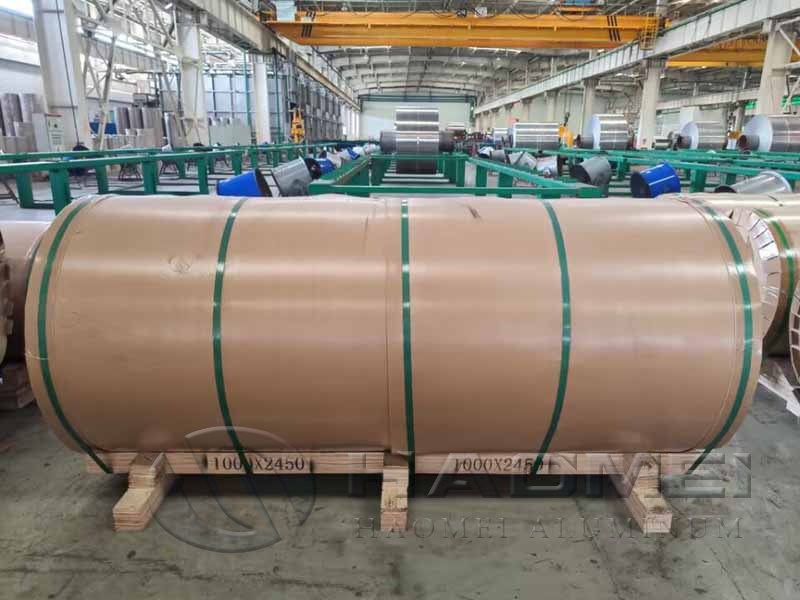
If you are sourcing coil for partitions or bulkheads, Aluminium coil for tankers bulkhead is often specified alongside plate to keep grain direction and thickness consistency aligned with the fabrication route.
5) What welding filler and process works best for 5754 aluminum tanker fabrication?
For 5754, fabricators most commonly use MIG (GMAW) for long seams and TIG (GTAW) for roots, thinner sections, or detail work. The biggest real-world drivers are productivity, porosity control, and distortion management.
Filler selection is usually between 5xxx-series fillers:
- ER5356: Common choice for many 5xxx base metals, good all-around mechanical properties.
- ER5183: Sometimes chosen to target higher strength in certain joints, often discussed alongside 5083 builds.
The better question is not only "which filler," but "how do we keep weld quality stable":
- Use clean, dedicated aluminum prep tools and remove oxide immediately before welding.
- Control shielding gas flow and avoid drafts to reduce porosity.
- Manage heat input with sequencing and fixturing to limit distortion on long tanker seams.
- Avoid contamination from cutting fluids, markers, and shop dust, which commonly show up as porosity and inclusions.
Common welding and fabrication pain points, and how to avoid them
| Pain point seen in tanker builds | Likely cause | Practical fix |
|---|---|---|
| Porosity in long MIG seams | Contamination, poor gas coverage | Better cleaning discipline, stable torch angle, draft control |
| Distortion on shell seams | Excess heat input, poor sequencing | Stitch strategy, back-step, stronger fixturing |
| Cracking during forming near welds | Too tight radius, wrong temper | Use H111 for severe forming, adjust forming radius |
| Galvanic corrosion around fittings | Mixed metals, trapped moisture | Isolate dissimilar metals, seal crevices, use compatible hardware |

Questions to ask your supplier when ordering 5754 aluminum for tanker plate
- Can you provide consistent surface quality suitable for tank fabrication, such as low defect rate and controlled roughness?
- What thickness tolerances and flatness can you hold on wide sheets used for shells?
- Do you offer test certificates for chemistry and mechanical properties per heat and per batch?
- Can you supply plate and coil from compatible production routes to reduce variability in forming and welding?
These are the questions that most directly affect yield in manufacturing and long-term tanker performance, which is why they keep showing up in recent searches and Q&A threads about 5754 aluminum.