
Fuel tank trucks increasingly use aluminum alloys because they help reduce vehicle weight while maintaining good strength, corrosion resistance, and service life. For fleet operators, body builders, and special vehicle manufacturers, choosing the right aluminum sheet for fuel tanker production is not only a material decision. It also affects payload, welding quality, compliance, maintenance, and total operating cost.
Why aluminum is widely used in fuel tank trucks
Compared with carbon steel, aluminum alloy offers a lower density, usually around one third of steel. This makes it possible to reduce the dead weight of the tank body and increase effective payload under legal gross vehicle weight limits. In fuel transportation, this advantage often translates into better transport efficiency and lower fuel consumption per trip.
Another important reason is corrosion resistance. Refined oil products such as gasoline and diesel require clean storage and transport conditions. Aluminum alloys used for tanker shells and heads have good resistance to atmospheric corrosion and suitable compatibility with common fuel media when the correct alloy and fabrication process are selected.
In addition, aluminum tank bodies are easier to form into large panels, and mature MIG welding processes are already widely used by experienced tanker fabricators. Common applications include tank shell plates, compartment partitions, end heads, baffles, and some structural parts for special vehicles.
Which aluminum alloys are commonly used
In the tanker market, 5xxx series aluminum-magnesium alloys are the mainstream choice. These alloys balance strength, weldability, and corrosion resistance well. Among them, 5083 and 5454 are the most common for fuel tanker bodies.
If your project focuses on higher strength and mature market acceptance, 5083 aluminum plate is often used for tank shells, heads, and structural sections. If the working environment involves long-term service at moderately elevated temperatures or the fabricator has a specification preference for tanker use, 5454 aluminum plate is also a common option.
The table below gives a practical comparison for purchasing discussions.
| Alloy | Main Features | Typical Tanker Use | Notes for Procurement |
|---|---|---|---|
| 5083 | High strength, excellent weldability, good corrosion resistance | Tank shell, end caps, bulkheads | Widely specified, stable market recognition |
| 5454 | Good corrosion resistance, good weldability, suitable for tanker structures | Shell plates, heads, partitions | Often chosen for tank truck applications |
| 5182 | Good formability, moderate strength | Some formed parts, covers, special structures | Confirm strength requirement before substitution |
| 5754 | Good corrosion resistance, easy processing | Auxiliary parts, some vehicle panels | Usually not the first choice for main shell in heavy-duty tanker service |
When discussing material grade with suppliers, it is also important to confirm temper, common examples being O, H111, or H32 depending on design and forming requirements. Tank shell production often needs a balance between formability and final strength after welding.
How to purchase aluminum sheet for fuel tanker projects
For bulk procurement, price alone should never be the only factor. A low quotation can become costly if the plate has poor flatness, unstable mechanical properties, or excessive thickness deviation. The following points are practical checkpoints when sourcing aluminum plate for tank truck manufacturing.
1. Confirm the exact application part
Different parts of a tanker may require different thicknesses and even different alloys. Shell plates, end heads, anti-wave baffles, and support components do not always use the same specification. Before requesting an offer, prepare a material list that includes alloy, temper, thickness, width, length, quantity, and intended use.
2. Check standards and quality documents
Ask the mill or distributor for material test certificates covering chemical composition, tensile strength, yield strength, elongation, and relevant dimensional tolerances. For export or regulated vehicle manufacturing, clients may also request compliance with ASTM, EN, or other contract standards. The exact standard depends on the project region and the vehicle builder's technical file, so this should be verified during quotation review rather than assumed.
3. Focus on plate quality, not just alloy name
Two suppliers may both offer 5083 or 5454, but the usable quality can still differ. Review these items carefully:
Surface quality, with no cracks, heavy scratches, oil contamination, or edge defects.
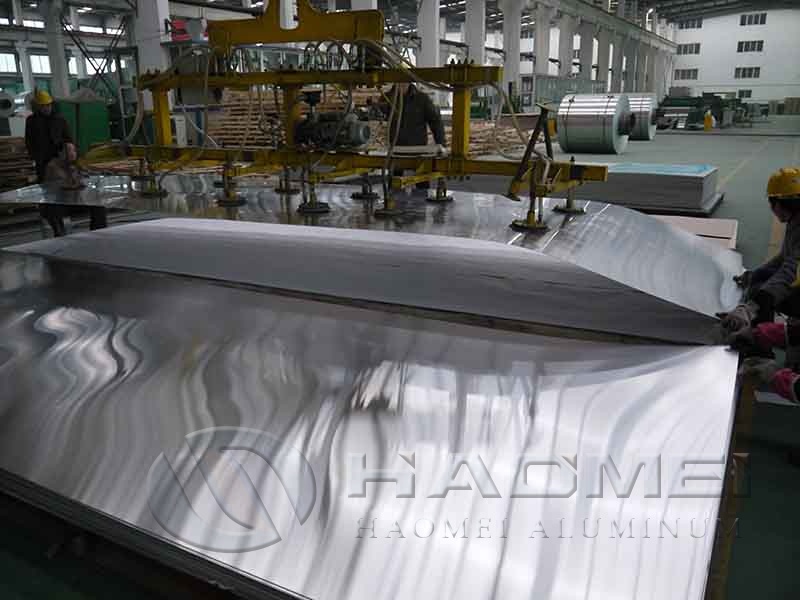
Flatness, especially for large shell plates used in rolling and welding.
Thickness tolerance, because actual weight and forming performance depend on it.
Internal quality and grain structure consistency for stable fabrication.
Weldability in real workshop conditions.
4. Match width and length to production efficiency
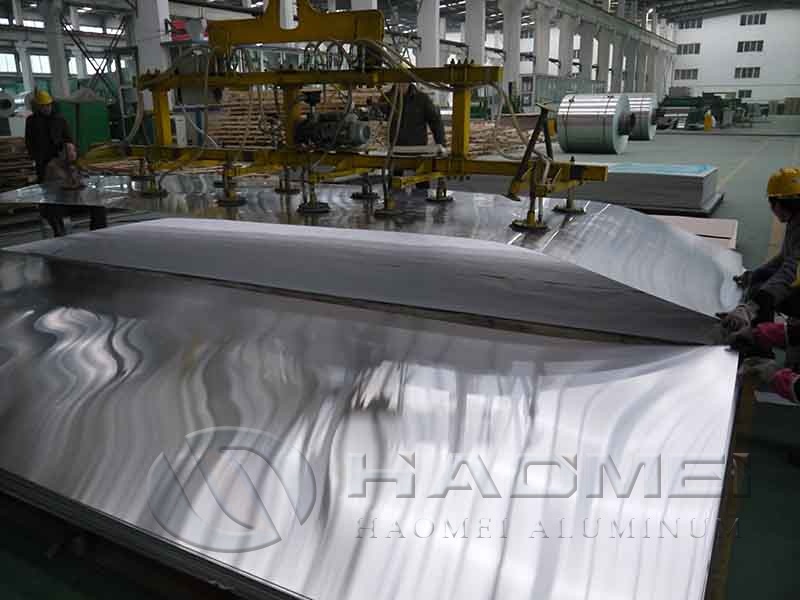
Wide plates can reduce weld seams, which is often beneficial for tank manufacturing efficiency and final appearance. However, oversized plates may increase freight cost, handling difficulty, or scrap loss if they do not match the fabricator's rolling equipment. The ideal purchasing plan balances material utilization, transport, and workshop capability.
5. Compare total cost, not only metal price
The cost of aluminum sheet for fuel tanker use is influenced by aluminum ingot price, alloy surcharge, processing fee, plate dimensions, and freight. A cheaper unit price may still lead to higher total cost if the plates are not cut efficiently, arrive late, or create rework in forming and welding. For regular consumption, many vehicle manufacturers prefer to evaluate suppliers based on price stability, batch consistency, and delivery reliability.
6. Review supply capacity and lead time
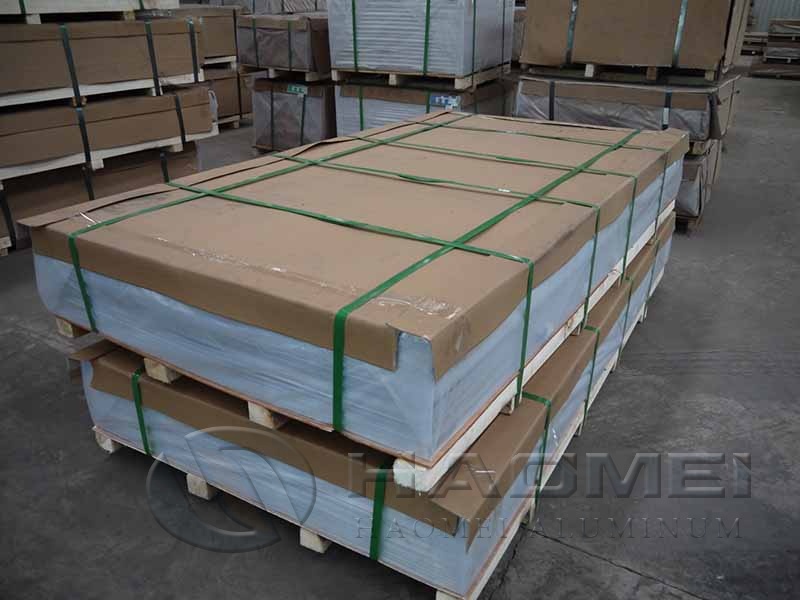
Large tanker orders usually require stable batch supply. Confirm monthly production capacity, rolling width range, heat treatment capability if needed, packaging method, and shipping schedule. If your project uses repeated specifications, ask whether the supplier can reserve rolling slots or maintain stock for faster delivery.
A simple purchasing checklist is shown below.
| Item to Confirm | Why It Matters |
|---|---|
| Alloy and temper | Determines strength, formability, and welding behavior |
| Thickness and tolerance | Affects weight, safety margin, and fabrication quality |
| Plate size | Influences weld count, scrap rate, and transport cost |
| Test certificate | Supports traceability and project approval |
| Surface and flatness | Reduces workshop defects and rework |
| Delivery batch consistency | Important for stable mass production |
| Packaging and logistics | Prevents damage during long-distance transport |
For professional purchasers, the best supplier is usually one that can provide suitable alloy recommendations, stable dimensions, reliable documents, and consistent bulk delivery, rather than only the lowest initial quotation.