
5754 aluminum alloy, with aluminum as its base and containing 2.6%-3.6% magnesium and 0.5%-0.8% manganese, is a medium-strength aluminum alloy. Its tensile strength in the O/H111 temper is 180-240 MPa, and its elongation can reach up to 20%. It possesses excellent plasticity and weldability, and outstanding corrosion resistance, making it particularly suitable for marine climates and chemical contact environments.
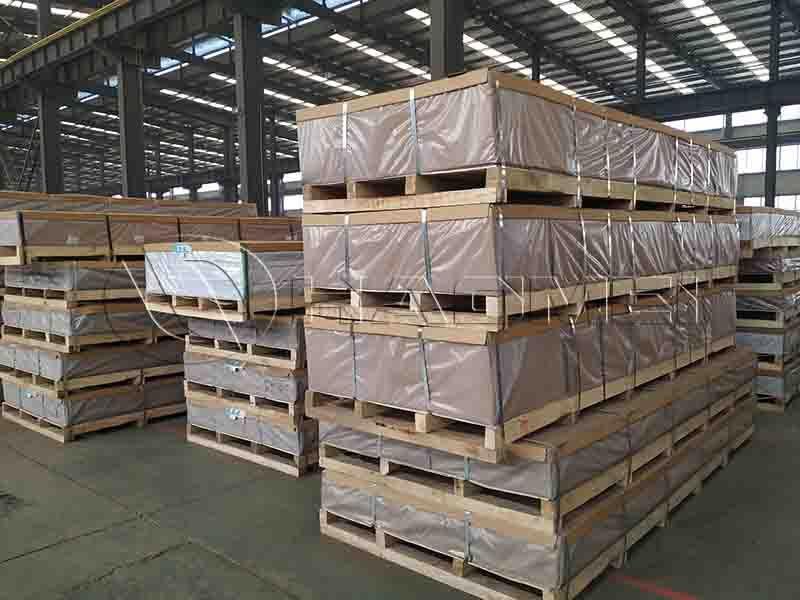
5083 aluminum sheet, on the other hand, has a higher magnesium content (4.0%-5.0%) and a manganese content of 0.20%-0.50%. It is a high-strength aluminum alloy with a tensile strength ≥275 MPa in the O/H111 state and a yield strength ≥125 MPa, significantly exceeding the strength of 5754 aluminum sheet. It also retains some plasticity and exhibits excellent resistance to seawater corrosion, making it the preferred material for harsh working conditions.
Tank Truck Types
1. Tank truck types made of 5754 aluminum plate
With its excellent plasticity, weldability, and moderate corrosion resistance, 5754 aluminum plate is primarily suitable for tank truck types with moderate strength requirements but certain demands on formability and sealing:
- Light oil tank trucks: Used for transporting light oils such as gasoline, kerosene, and light diesel oil. These tank trucks are mostly top-loading structures, requiring the tank body to be stamped and bent. The high plasticity of 5754 aluminum plate can meet complex forming requirements, while its oil resistance can withstand the corrosion of light oils. A silver-gray coating on the exterior of the tank body further enhances its radiation resistance and corrosion resistance.
- Viscous oil tank trucks: Used for transporting crude oil, lubricating oil, and other high-viscosity oils. The tank body requires a heating device. The weldability of 5754 aluminum sheet ensures a firm connection between the heating jacket and the tank body, and its corrosion resistance can withstand the corrosion of trace impurities in crude oil, making it suitable for the stress requirements of bottom-loading structures.
- Powder tank trucks: Used for transporting bulk cement, alumina powder, etc. These tank trucks rely on fluidized bed transport principles, requiring the tank body to possess certain sealing and forming precision. The easy machinability of 5754 aluminum can meet the precision manufacturing requirements of the tank's cylindrical structure and interfaces, and its medium strength can withstand the static pressure of powder cargo.
2. Types of tank trucks compatible with 5083 aluminum plate
5083 aluminum alloy, with its high strength and excellent resistance to extreme corrosion as its core advantages, is suitable for tank truck types with stringent strength and weather resistance requirements:
- Liquefied Gas Tank Trucks: Transporting media such as liquid ammonia, liquid chlorine, and liquefied petroleum gas. These tank trucks have large volumes, need to withstand high pressure, and often adopt a frameless structure. The tank body must simultaneously bear the weight of the cargo and longitudinal forces.
The high strength of 5083 aluminum plate ensures the rigidity of the tank body, preventing deformation under pressure. Its corrosion resistance can withstand minor leaks of liquefied gas, and it is suitable for the assembly requirements of accessories such as sunshades and emergency shut-off devices.
- Acid and Alkali Tank Trucks: These tank trucks transport highly corrosive acid and alkali chemicals. They require extremely high corrosion resistance. The high magnesium content of 5083 aluminum plate gives it excellent chemical corrosion resistance, making it suitable for direct tank manufacturing or as a base material for anti-corrosion linings. It is also compatible with the installation of auxiliary devices such as heating jackets, and can handle high or low temperature conditions with acid and alkali media.
- Heavy-Duty Tank Trucks: These include large-capacity tank trucks without a bottom frame (such as the G70 light oil tank truck and the G17A viscous oil tank truck). These tank trucks have thicker tank walls (typically 8-10mm) and need to withstand greater loads and longitudinal impacts.
The high strength of 5083 aluminum plate allows for a reduction in plate thickness, reducing weight while increasing the tank's load-bearing capacity. It is also suitable for the integrated welding of the traction device and the tank body.
Application Differences
Due to its good plasticity and formability, 5754 aluminum plate is often used in tank trucks for parts requiring complex forming and moderate stress, such as the tank body, end caps, and heating jacket shells.
Due to its high strength and resistance to extreme corrosion, 5083 aluminum sheet is mainly used in parts of tank trucks that are subjected to high stress and harsh corrosive environments, such as the bolstering device of bottomless tank trucks, the tank body of liquefied gas tank trucks, baffles, end caps, and bottom load-bearing components of tank trucks.